
Loading...
Serving Pittsburg, CA and surrounding areas. (925) 318-8532
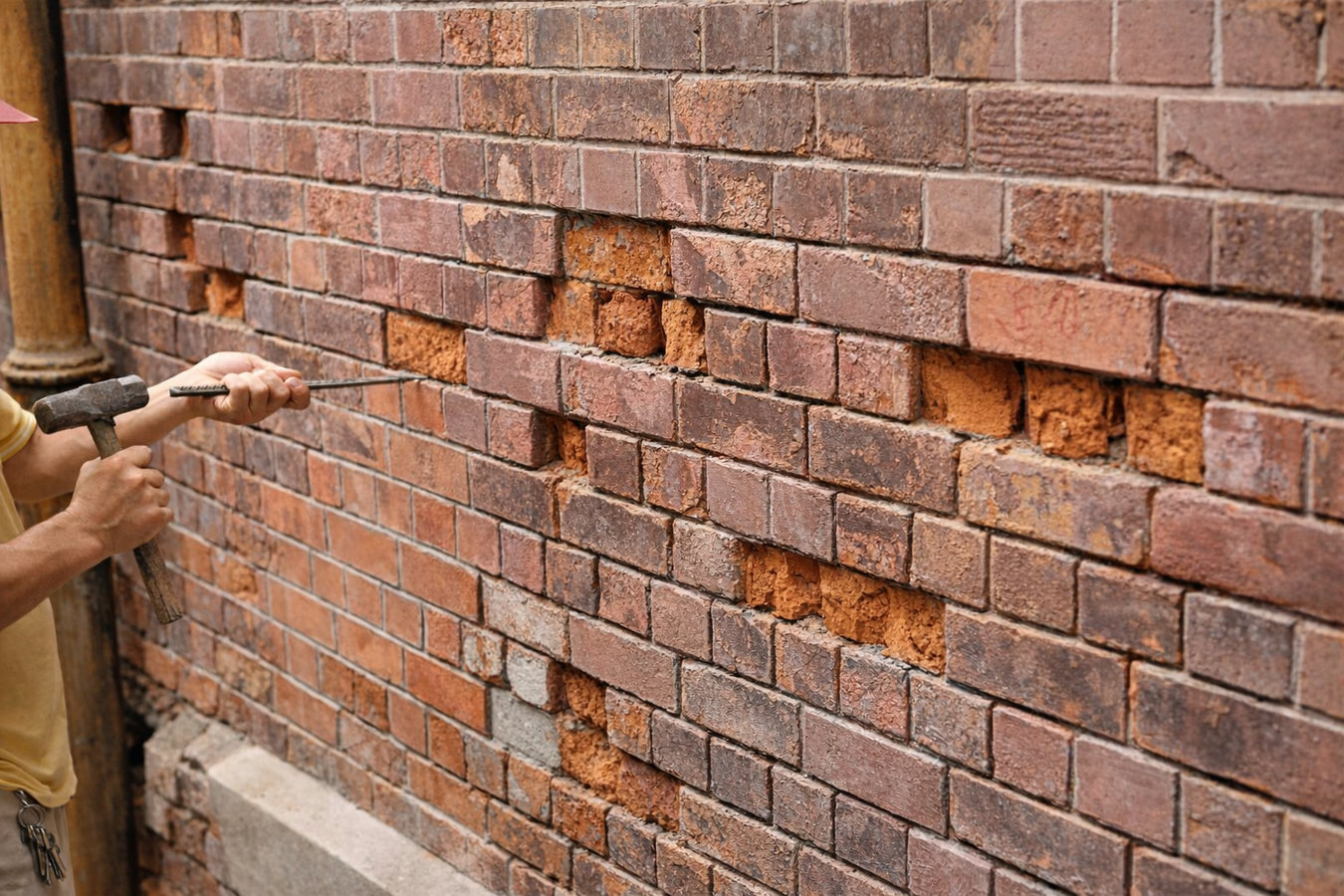
Cracked bricks, crumbling mortar, and stair-step wall cracks are your home asking for help. We repair what is failing, match the materials to your home, and close the door on water damage.
Brick repair in Pittsburg, CA covers mortar replacement, cracked or spalling brick removal and replacement, and wall stabilization - most small to moderate jobs are completed in one to two days and stop water from reaching the structure behind the brick. The mortar between bricks wears out before the brick itself does - that is by design. When the mortar fails, water gets in, and once water is behind your wall it works fast, especially through Pittsburg's wet winters.
Pittsburg sits on expansive clay soils that swell in the rainy season and shrink in the dry summer, and that ground movement is why stair-step cracks appear in so many brick walls here even after a careful repair. If the joint between two bricks is the only problem, the fix is straightforward tuckpointing. But when the bricks themselves are cracked, flaking, or sounding hollow when tapped, replacement is needed alongside the mortar work.
The sooner you act, the simpler the repair. A handful of damaged bricks addressed now costs a fraction of what a section of wall failing into the next wet season will demand.
Walk close to your brick wall, chimney, or planter and look at the lines between the bricks. If the mortar crumbles when you press it lightly, or has gaps where it has fallen out entirely, repair is overdue. Water will find those gaps, and once it gets behind the wall the damage multiplies.
If the face of a brick is peeling off in thin layers, water has been getting in and drying inside the brick repeatedly. In Pittsburg's climate, this is most common on walls that face west or north and take the brunt of winter rain. A spalling brick cannot be patched - it needs to come out and be replaced.
Stair-step cracks - where the crack follows the mortar joints diagonally up the wall - are a common sign of foundation or soil movement. Given Pittsburg's expansive clay soils, this pattern appears more often here than in areas with more stable ground. It does not always mean a structural emergency, but a mason should take a look before the next rainy season.
If your chimney looks like it is pulling away from the house even slightly, or you can see a gap between the chimney and the siding, that needs attention before winter. Chimneys are heavy, and even a small lean can mean the mortar holding the whole structure together is failing. Waiting on this one is not a good idea.
Our brick repair work starts with an honest assessment - we look at what is failing, whether the issue is confined to the mortar or has spread to the bricks themselves, and whether there is any sign of structural movement underneath. Most jobs combine some mortar replacement with brick removal and replacement, because deterioration rarely stops cleanly at one material. When only the mortar is failing, we use targeted tuckpointing rather than disturbing bricks that are still sound.
Matching replacement bricks to what is already on your home is one of the more time-consuming parts of the job, especially on older Pittsburg homes where the original brick may have been made locally or sourced from a supplier that no longer exists. We take the time to source materials that are close in size, texture, and color - and we use a mortar mix appropriate for your home's age rather than a one-size-fits-all formula. For homes where the wall itself has started to shift or lean, the repair goes beyond individual bricks, and we will tell you clearly if that is what we are seeing.
Best when brick faces are still intact but the material between them has eroded, crumbled, or developed gaps.
Suits walls or chimneys where individual bricks are spalling, cracked through, or hollow-sounding and cannot be saved.
Appropriate for chimneys showing visible cracking, leaning, mortar loss, or water staining near the fireplace opening.
Pittsburg's combination of hot dry summers and concentrated winter rainfall is hard on brick and mortar. Temperatures regularly push above 95 degrees in summer, drying out and contracting mortar joints, and then November through March brings focused rainfall that soaks back in. That repeated cycle accelerates the breakdown that leads to the crumbling and cracking homeowners see in late fall, right when the first rains hit already-weakened joints. Homes in the older neighborhoods near downtown and along the waterfront - many built between the 1920s and 1960s - are working with original brick and mortar that has been through that cycle for 60 to 100 years. Older brick from that era is softer and more porous than modern brick, which means repairs need a mortar mix matched to the material rather than whatever comes standard off a shelf.
Many homeowners also find that after addressing their brick and mortar, the driveway slab is the next area showing the effects of the same clay soil movement - our driveway pavers service covers paver installation built for East Bay conditions. We serve homeowners across the area, including in Concord and Martinez, where similar clay soil conditions and older housing stock create the same repair patterns we see across Pittsburg every season. For guidance on California masonry standards, the Brick Industry Association publishes technical standards on mortar selection and brick repair that our work follows, and the California Contractors State License Board is where you can verify any contractor license before hiring.
We respond within 1 business day. Describe what you are seeing - crumbling mortar, flaking bricks, a crack pattern - and we will schedule a free on-site visit. You do not need to know what kind of repair you need yet.
We examine not just the obvious damage but the surrounding area - looking for signs of water intrusion, soil movement, or hidden deterioration. The visit typically takes 30 to 60 minutes. You get a written estimate that explains what we found and what we recommend, with no obligation.
We tell you upfront whether the job requires a permit from the City of Pittsburg Building Division. If it does, we handle the application. Before work starts, clear furniture and planters from the area - grinding out old mortar produces fine dust, so covering nearby garden beds with a tarp helps.
The crew grinds out damaged mortar, removes bricks that cannot be saved, and packs in matched material. Fresh mortar needs 24 to 48 hours to set before it should get wet. We do a final walkthrough before leaving and explain what to watch for and when to call if anything looks off.
We come to you, show you exactly what we see, and give you a written quote. No obligation, no pressure. We reply within 1 business day.
(925) 318-8532Many Pittsburg homes were built before 1960, and the bricks in those walls need a softer mortar than what modern construction uses. Using the wrong mix causes the brick to crack rather than the joint - turning a simple repair into a bigger problem. We assess your home's age and brick type before selecting a mix.
A lot of homeowners worry about being told they need a full rebuild when a targeted repair would do the job. We look at your brick with fresh eyes and give you a straight answer about what is actually failing and what is still sound. You pay only for what your home genuinely needs.
We have repaired brick on homes throughout Pittsburg and the surrounding East Bay communities. That means we know the clay soil patterns, the housing stock ages, and the seasonal timing that affects how repairs hold here - not just general masonry theory.
One of the most common homeowner complaints about contractors is discovering a bigger bill halfway through the job. We walk the entire area with you before starting, give you a written scope, and if we find unexpected damage once the old mortar is out, we stop and talk to you before proceeding.
Good brick repair is mostly invisible when it is done right - the wall looks the same, the joints hold, and water stays out. That is the outcome we are aiming for on every job, whether it is two bricks and a section of mortar or a full chimney repoint.
Replace cracked concrete with durable paver driveways that hold up to Pittsburg's clay soil movement and hot summers.
Learn MoreWhen the bricks are still sound but the mortar has eroded, tuckpointing restores the joints without touching the brick itself.
Learn MorePittsburg's rainy season starts in November - get your mortar sealed and walls protected before the first storm finds the gaps.